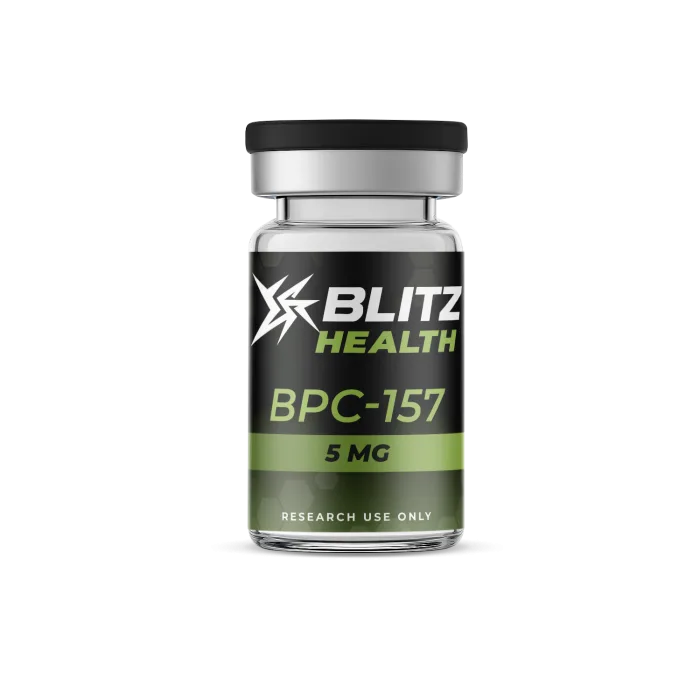
BPC-157
Price range: $38.00 through $128.00
- Third-party tested by certified labs
- Published certificates of analysis
- 98%+ purity standard
1 published certificate
Certificate information is temporarily unavailable.
Description
A single-component research material supplied for controlled research environments. Suitable for studies involving peptide characterization and method development in model systems.
Composition
• BPC-157
• Appearance: Lyophilized powder in a sealed research vial
Research Focus (non-clinical)
• Peptide identity and purity assessment via HPLC/LC-MS
• Assay development and calibration for quantitative analysis
• Chromatographic method optimization for impurity profiling
• Stability characterization of a lyophilized peptide under laboratory storage conditions
For qualified research professionals and institutional laboratories. Not for human use.
Documentation & Quality Assurance
Each lot is sourced through our verified global supply chain with emphasis on traceability and quality control. We work diligently to obtain and maintain third-party analytical reports (HPLC/LC-MS) and Certificates of Analysis for each batch, as part of our ongoing quality process. These documents are reviewed internally and displayed as they become available.
Important Notice
This product is intended for laboratory research use only. It is not intended for human or veterinary use, and must not be used for diagnostic, therapeutic, or clinical purposes.
This material is not a drug, medical device, or dietary supplement, and has not been evaluated by the U.S. Food and Drug Administration.
Quality & Manufacturing
We work directly with the manufacturers. Each supplier is reviewed for reliability, documentation integrity, and transparency in testing.
Our minimum purity standard is 98%. Every batch we ship has its own certificate of analysis, and every certificate confirms identity, purity and net content. Where available, endotoxin testing results are included on Certificates of Analysis to verify laboratory purity; their inclusion is for research quality assessment only and does not imply suitability for human or veterinary use.
All research materials are sealed for integrity and packaged for stability during storage and transport from manufacturing through final delivery.
About This Compound
What It Is
BPC-157 is a synthetic pentadecapeptide (a 15-amino-acid chain; sequence Gly-Glu-Pro-Pro-Pro-Gly-Lys-Pro-Ala-Asp-Asp-Ala-Gly-Leu-Val, molecular weight approximately 1419.55 Da) corresponding to a partial sequence of a protein originally isolated from human gastric juice.
Research Background
BPC-157 has been examined over approximately three decades of preclinical research, predominantly in rodent models (Sprague-Dawley rats, Wistar rats, mice, and genetically diabetic mice), as well as in beagle dogs and in vitro systems including cultured myenteric neurons and enteric glial cells (EGCs) derived from rat ileum and colon. In vitro studies have assessed its effects on neuronal survival rates and EGC proliferation in long-term culture, as well as on contractile responses in isolated human and rat intestinal muscle strip preparations. Limited early-phase clinical research has been conducted: a Phase I trial in 42 healthy volunteers was initiated in 2015 to evaluate safety and pharmacokinetics, and a Phase II study in ulcerative colitis reported no observed toxicity; no approved therapeutic applications exist, and no lethal dose has been established in toxicology studies.
Observed Areas of Interest in Research
Preclinical research has most consistently examined BPC-157's interactions with the nitric oxide (NO) system, including studies using NO-release paradigms, NOS inhibition via L-NAME, and NOS over-activity induction via L-arginine. Investigators have also studied signaling through the VEGFR2-Akt-eNOS and Src-Caveolin-1-eNOS axes, as well as VEGF and growth hormone receptor activation, in the context of angiogenic pathways. In neurotransmitter-focused research, studies have examined dopaminergic systems (DAT and VMAT transporters, dopamine receptors), serotonergic systems (5-HT synthesis and release, with direct receptor involvement ruled out in some enteric models), and additional systems including glutamate, GABA, acetylcholine, and noradrenaline, across paradigms involving receptor blockade, over-activity, sensitization, and depletion. Additional mechanistic areas under investigation include heme oxygenase-1 (HO-1) antioxidant activity, free radical scavenging, and a role as a stabilizer of cellular junctions.
Research Notes
Purity verified by third-party laboratory analysis (Certificate of Analysis available on request). Supplied strictly for in-vitro and laboratory research use only. Not for human consumption.
All information above is provided for research and educational reference only and summarizes findings from published scientific literature (predominantly in-vitro and animal models). It does not describe outcomes in humans. This product is not a drug, dietary supplement, or article intended for human or veterinary use.
Specifications
| Weight | 0.0625 lbs |
|---|---|
| Dosage | 5mg, 10mg, 20mg |
Certificate of Analysis
Certificate of Analysis
Every batch undergoes independent third-party laboratory analysis to verify identity, potency, and safety. Testing includes quantitative assay verification, heavy metals screening, and comprehensive microbial analysis.
All Available COAs
Storage Instructions
All products from Blitz Health are manufactured using a lyophilization (freeze-drying) process. This method is designed to maintain product integrity and allows vials to remain stable during shipping for approximately 3–4 months.
Once a vial is reconstituted with bacteriostatic water, it should be stored in the refrigerator to help maintain stability. Under these conditions, reconstituted material is generally considered stable for up to 30 days.
Lyophilization is a dehydration technique in which compounds are frozen and then exposed to low pressure. This causes the water in the vial to sublimate directly from solid to gas, leaving behind a stable, crystalline white structure. This powder can be kept at room temperature until reconstitution.
Upon receipt, products should be stored away from heat and light. For short-term use, refrigeration at approximately 4°C (39°F) is suitable. For long-term storage (several months to years), vials may be placed in a freezer at approximately -80°C (-112°F). Freezing is the preferred method for preserving product stability over extended periods.
⚠️ Important Notice:
These products are intended for research use only. Not for human consumption.
Frequently Paired in Research
Compounds frequently studied alongside BPC-157 in the research literature — supplied strictly for in-vitro and laboratory research use only.